MultiPoD takes the stage: a recap of recent conferences
From international panels to hands on workshops and forthcoming conference papers, the MultiPoD team has spent the past few months engaging with the international research community on questions central to the project, namely how artificial intelligence can support, rather than replace, genuine democratic dialogue across cultures and languages. What follows is a summary of these events and the work presented at each.
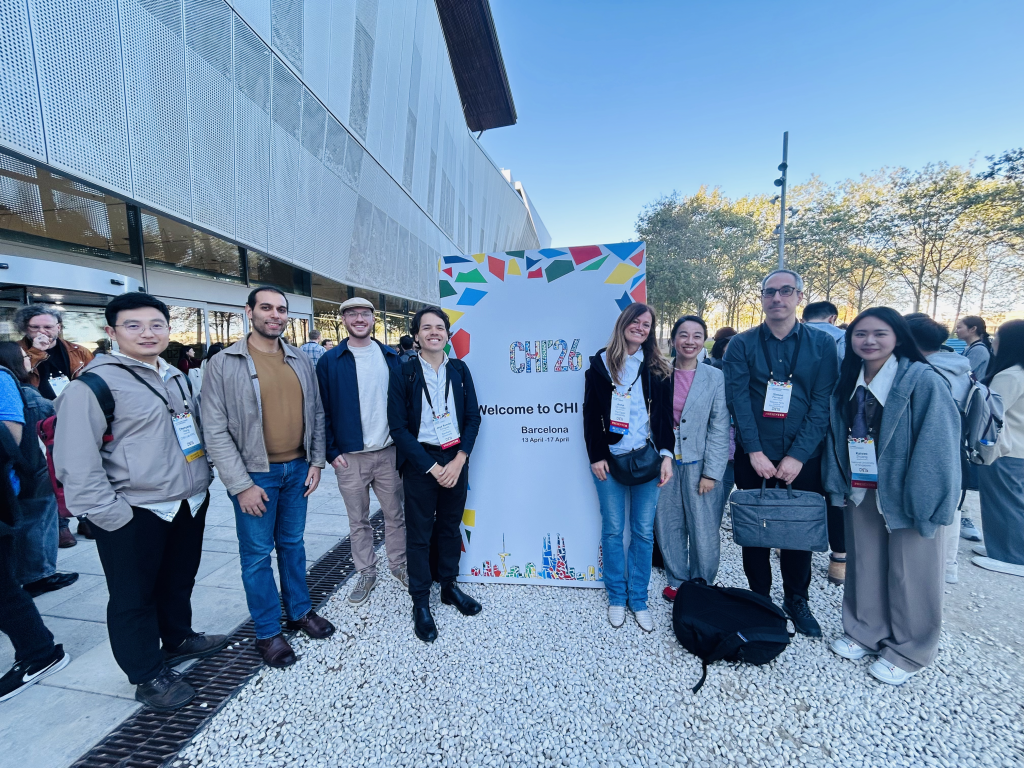
Debating the Future of Deliberation at CHI 2026
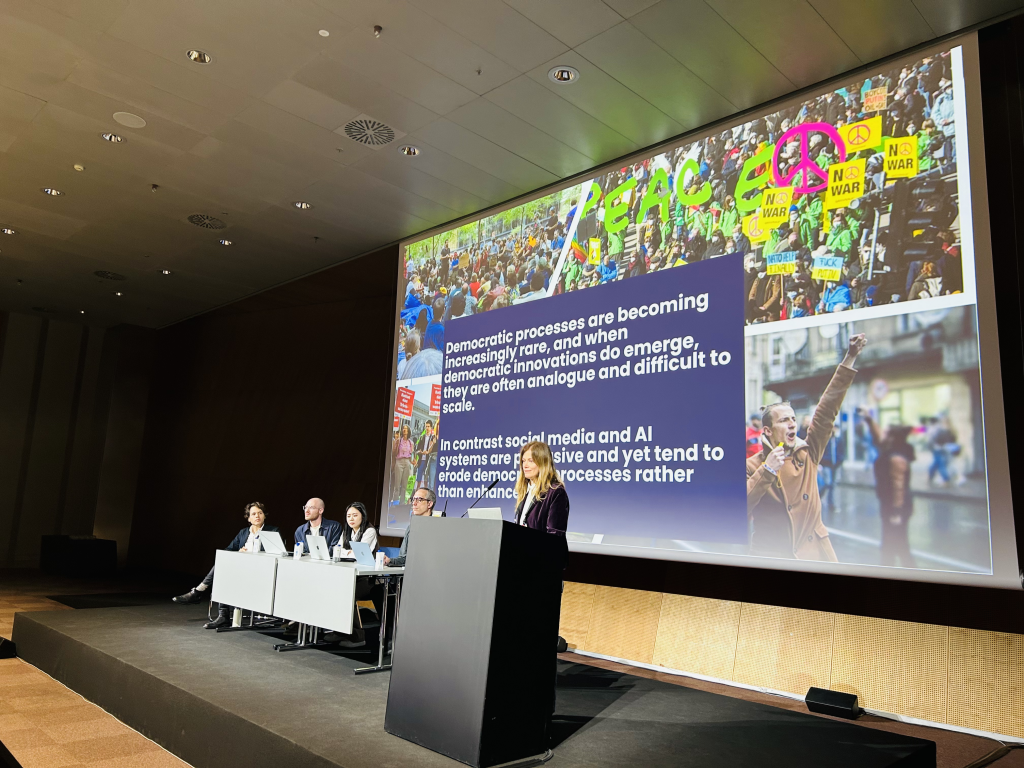
Anna De Liddo (The Open University) represented the project in the panel “AI Agents and the Future of Deliberation: Designing Human–AI Collaboration for Democratic Dialogue” (Panel P4) at CHI 2026.
Bringing together researchers from Asia, Europe and North America, the panel examined how AI agents (from large language models and multi-agent simulations to conversational assistants and reflective companions) are reshaping how people deliberate together and form collective judgements. These technologies hold the potential to scale participation and bridge linguistic and cultural gaps, yet they also raise questions about authenticity, legitimacy, and human autonomy in civic dialogue. Through interactive polling, structured debates, and audience co-deliberation, the session invited CHI participants to explore how we can preserve the democratic values of deliberation while embracing the creative potential of AI.
Alongside Anna, the panel featured Weiyu Zhang and ShunYi Yeo (National University of Singapore; Singapore University of Technology and Design), Simon Tangi Perrault (Telecom Paris, IP Paris), Jiaxin Pei (Stanford University), Francesco Veri (University of Zurich), Maurice Flechtner (University of Zurich), and Horacio Saggion (Universitat Pompeu Fabra).
Organising the 2nd Workshop on Language-driven Deliberation Technology
Anna De Liddo and Lucas Anastasiou also co-organised the 2nd Workshop on Language-driven Deliberation Technology (DELITE) along with researchers from Heinrich Heine University Düsseldorf, University of Stuttgart, University of Passau and GESIS Leibniz Institute for the Social Sciences.
The workshop was co-located with LREC 2026 in Palma, Mallorca, and brought together researchers working at the intersection of natural language technologies and democratic deliberation. It explored how language technology – particularly NLP and LLMs – can support rather than replace human deliberation. Framing deliberation as an exercise in collective intelligence, it gathered researchers from NLP, HCI, political science and philosophy to address open challenges such as the scarcity of large-scale deliberation data, argument mining, evaluation, and questions of trust, bias and ethics. The accepted papers and a closing panel moderated by Lucas Anastasiou focused on the gap between benchmark performance and real-world deployment, and on the central tension between scaling participation and preserving the legitimacy and diversity of deliberative decisions – with a shared view that AI should augment facilitators and amplify diverse voices rather than substitute for human judgement.
HHAI 2026 in Brussels
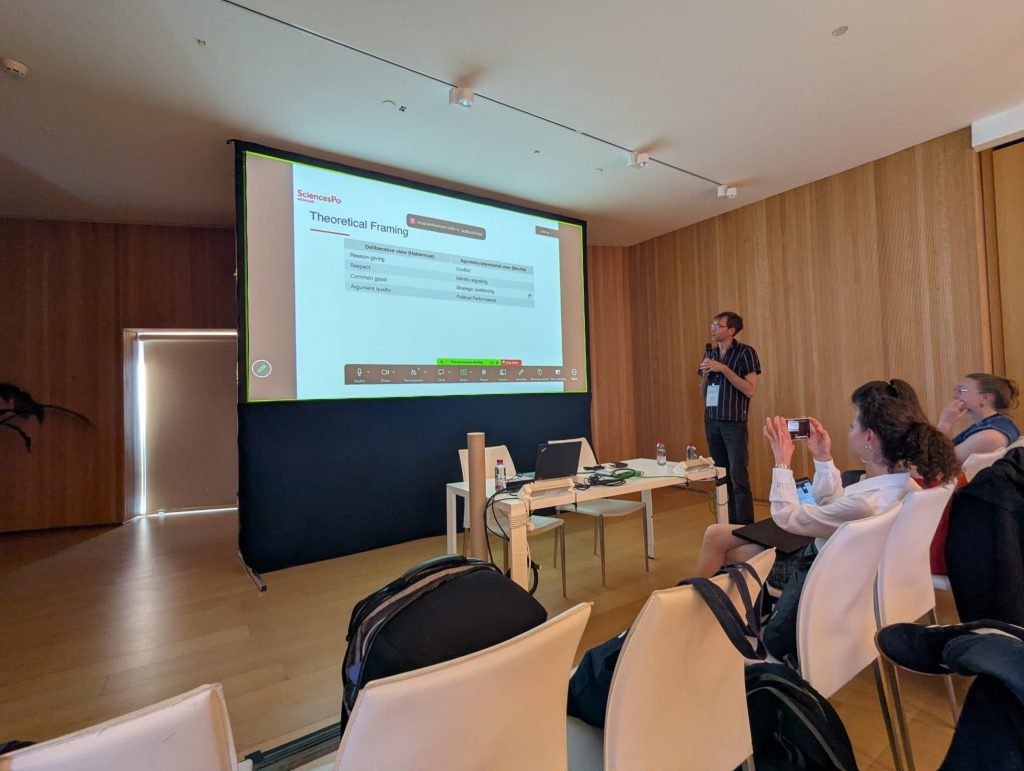
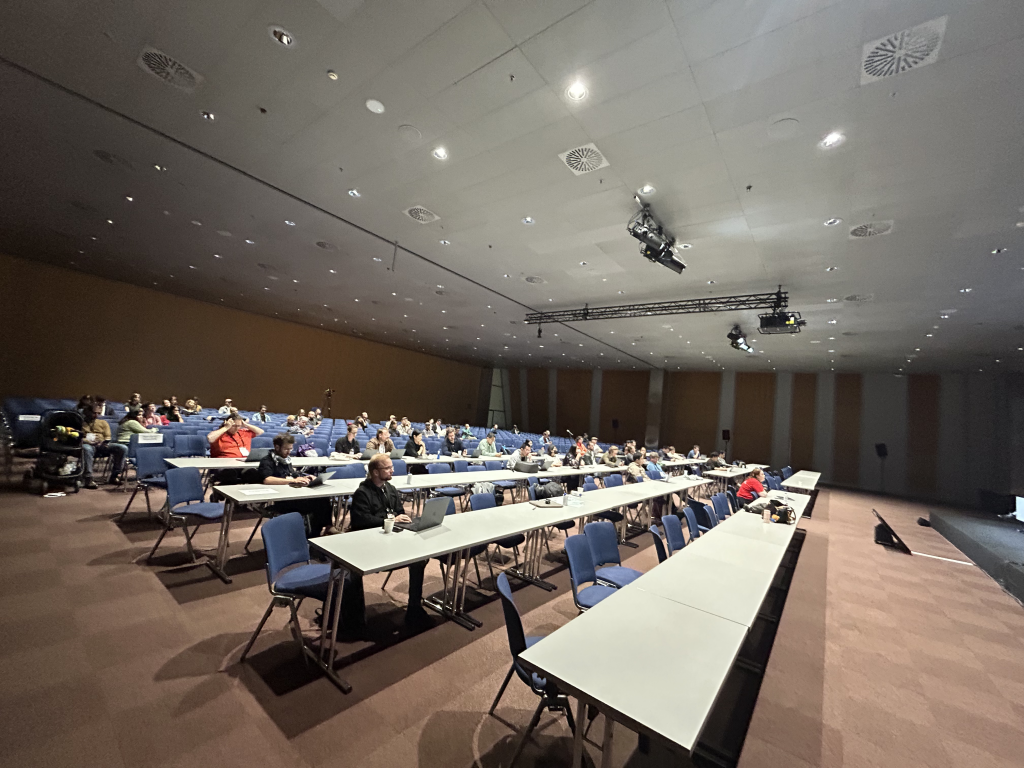
After that, the team headed to Brussels for HHAI 2026 — the 5th International Conference on Hybrid Human-Artificial Intelligence, where Lucas Anastasiou and Anna De Liddo presented their paper “The Synthetic Persona Fallacy in HCI-Q Methodology.”
The paper asks whether Large Language Models can automate Q-methodology – a robust statistical tool for uncovering citizens’ subjective viewpoints – by acting as demographically grounded “Synthetic Citizens.” Grounded in the MultiPoD context of building cross-cultural citizen assemblies, the team collected baseline Q-sort data from human crowdworkers (N=62) and tasked LLM-driven “Synthetic Users” with matching demographic profiles to perform the same tasks.
The results showed a profound lack of structural correspondence. Rather than replicating human viewpoint pluralism, synthetic users exhibited severe variance collapse, defaulting to a rigid, homogeneous consensus, and displayed distinct “normative amplification” and “coherence biases.” The authors argue that LLMs cannot safely replace human subjectivity in qualitative design research. Instead, they propose re-conceptualising synthetic users as a “sterile baseline” within a subjectivity wind tunnel – a tool where human deviations from the AI’s predictable consensus actively pinpoint the real cultural, emotional and sociotechnical friction in deliberative systems.
First Conference Presentation on Culturally Sensitive Language Models at SLATE 2026
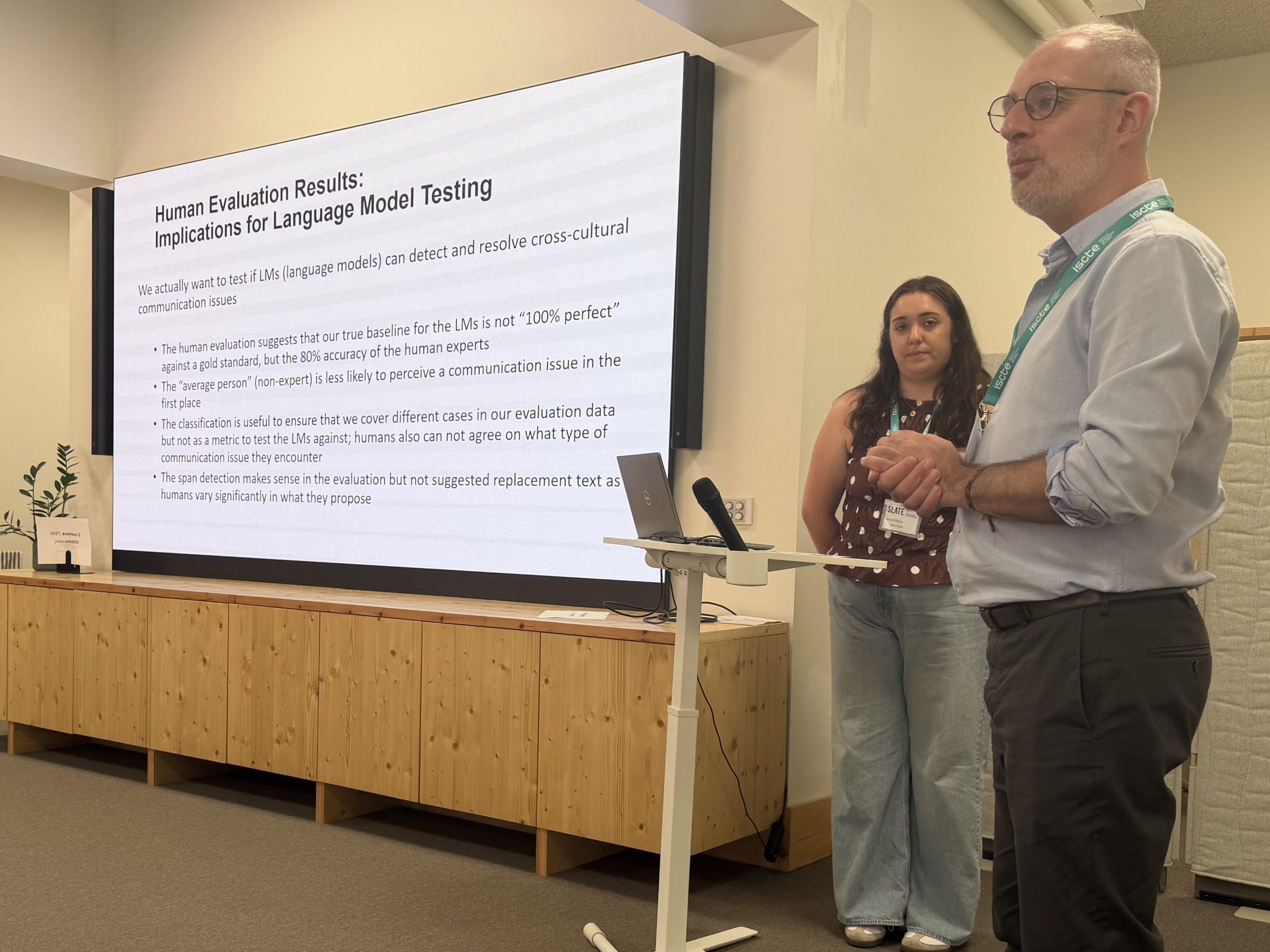
The project’s most recent presentation turned to a related question, namely where language models might still be useful in deliberation, provided their limits are properly understood. At the international symposium about languages, SLATE 2026, Alice Vieira and Raquel Amaro (CLUNL, NOVA University) presented alongside Lyndon Nixon (Storypact GmbH) in MultiPoD’s first conference presentation dedicated to Culturally Sensitive Language Models. The presentation examined how communication breakdowns can occur even between speakers of the same language, where words, framing and implicit assumptions carry different weight depending on cultural background. Drawing on a human evaluation exercise, the authors found that expert annotators reached eighty percent accuracy in identifying culturally sensitive communication, against under forty percent for non expert participants, a result that led them to treat expert performance, rather than a perfect abstract score, as the relevant benchmark for testing language models.
The models under evaluation, including Mixtral and OpenEuroLLM, were deliberately small and locally deployable, in line with the project’s interest in energy efficient, European, open source AI. They performed well on explicit issues such as insult and provocation, but struggled with more implicit forms of miscommunication, including framing, value mismatch and cultural drift. A Culturally Sensitive Language Model developed from this work will be tested in a real European political deliberation in September, extending the research from controlled evaluation into live democratic practice.